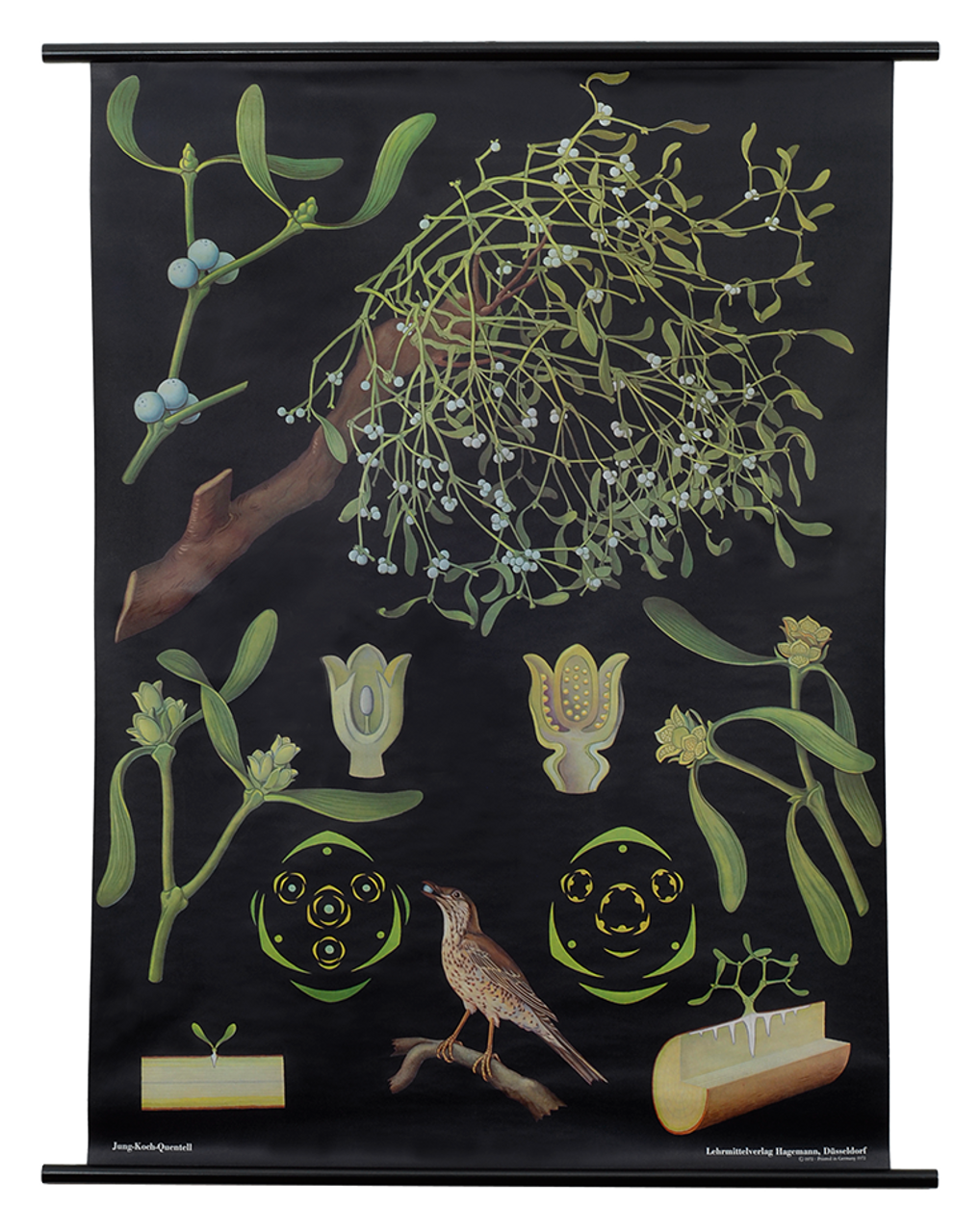


Mistletoe Botanical Poster - Viscum album
The Science:
European or common Mistletoe is an Obligate Hemiparasite, a plant which must attach itself to a tree or shrub in order to complete its lifecycle. It has been collected for its medicinal and spiritual/magical properties since ancient times, and is familiar from its use as a holiday decoration and the tradition of lovers kissing beneath it. Also depicted is The Mistle-Thrush (turdus viscivorus) a main spreader of mistletoe in Europe thanks to its consumption of the berries. This is one of a wonderful series of Scientific German Educational Charts, created in the 1950s and 60s and still produced by the original printer, internationally recognized for producing educational science charts since 1929. These charts are issued today using the original film and same methods as the first printing. They are printed without inscription for both classroom study and decorative purposes, with special attention paid to botanical detail and scientific accuracy.
The Story:
Mounted on linen canvas stretched on wooden rods for display, each measures 44.5 inches tall by 32.25 inches wide (85 cm x 120 cm), and comes with a nylon cord strung through the top wooden rod for easy hanging. Each comes securely rolled and will be shipped to you in a sturdy mailing tube. These lovely botanical posters are large, colorful and impressive pieces of science decor. Add a touch of vintage classroom style to your home today!
DETAILS
SKU: HD-PO0004Dimensions: 36"W x 46.5"H
Scientific Name: Viscum album
Origin: Germany
Material: Linen backed canvas
Shipping Restrictions: None.
- Color:
- Green
- Color:
- Blue
- Origin:
- Europe


