Yellow Paper Wasp - Polistes olivaceus
The Science:
The Paper Wasp creates nests using dead wood, bark, and plant stems, which it chews up and mixes with its own saliva as a glue. Despite being very paper-like, these nests are water-resistant and consist inside of hexagonal cells visually similar to bee hives. Unlike its aggressive cousins, yellowjackets and hornets, the paper wasp will usually only attack if its nest is threatened. This highly social insect feeds on caterpillars and other insects. Recent studies have shown that the paper wasp has some measure of facial recognition when it comes to other wasps, which helps to keep the peace in multicolony systems.
The Story:
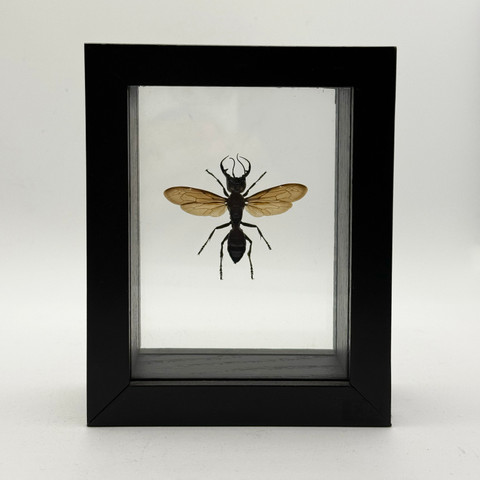
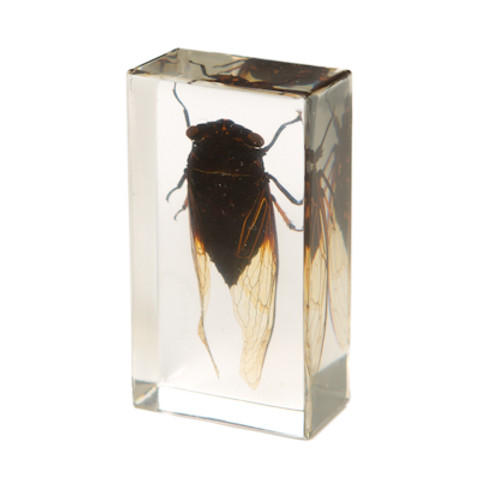
This common Yellow Paper Wasp specimen is embedded in clear Lucite resin and is an excellent little decorative piece or educational display. Polistes olivaceus is an attractive Paper Wasp found widely across Asia, with a deep yellow color extending to its antennae and legs. These cute little Insect pieces are fun to collect and make great gifts for kids!
DETAILS
SKU: AP-RE0013Dimensions: 1.13"W x 1.75"H x 0.75"D
Scientific Name: Polistes olivaceus
Origin: China
Shipping Restrictions: International wildlife export fees apply
Customers with shipping addresses outside of the US will be charged an additional fee. Read our full international wildlife shipping policy here.
- Color:
- Yellow
- Color:
- Brown
- Origin:
- Asia
- Shipping Restrictions:
- IF&W